Author Archives: othersideoflife

HOME BLITZ/GUITAR TRIPS/GREYSKULL/HORSESPIRIT PENETRATES/WATERSPORTS at a random bodega in Brooklyn, 6/24/06

One of the joys in life is when what appears to be a complete clusterfuck, a SNAFU of the highest order, actually turns out okay. It’s even more joyous when it turns out better than okay, even a good fucking time. That’s what happened last Saturday at the Home Blitz/Guitar Trips/Greyskull/Horsespirits Penetrate/Watersports show in the back room/restaurant area of some random bodega on Broadway deep in the heart of Bushwick. Organized by my man Russ Waterhouse of Watersports and Blues Control, this was originally was supposed to go down at Micheline’s, a Caribbean restaurant down the block. Needless to say, they double-booked and the combined weird noise/fashion show didn’t go down (though that would’ve been an interesting clusterfuck, too).

Watersports began the show with their characteristic lo-fi new age murk, and all I can say is I continue to be impressed with the way Russ and Lea play together, both in Watersports and their more “rock” project Blues Control. What they do is pretty much what I want to hear, all the time. The two new songs they played (and I assume that they’re playing on their current tour through the South, check the links for dates) were sweet meditative faux-nature awesomeness. As I’ve written elsewhere, you definitely need to hear it.

The next two bands, Horsespirits Penetrate and Greyskull, were more akin to that noise thing that ‘the kids’ do these days, except about 90% more entertaining and fun than most anything I’ve seen lately. Maybe it’s ’cause these guys are from Western Mass., which seems to be a hotbed for this stuff (Byron?). Or maybe it’s just ’cause they were good, committed to non-craft craftiness. I dunno.

The pleasant surprise of the evening was Guitar Trips, who I had no idea about whatsoever. Fantastic psychedelic guitar-drums duo jams providing lots of heavy drone. Kind of like when you rub your eyes and various lights keep rolling through your field of vision. Even with the abruptness of some of the transitions, this was a-rollin’ and chooglin’. I expect we’ll hear more from these dudes.

The headliner of the evening was New Jersey’s own Home Blitz, playing their second-ever show hot off the heels of their debut 7″. Nervousness abounded, and the 15-or-so takes on the first song probably didn’t help much, but I actually thought it was a rockin’ good time. Apparently some of the noisier dudes were rollin’ eyes, but I liked it. And fuck it, none of us would be here without Half Japanese, so I’m cool with that. All in all, considering none of this might’ve come off at all, that’s fine with me.

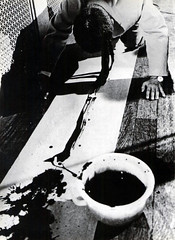
R.I.P., Allan Kaprow


From the Monterey County Herald:

Allan Kaprow, an artist who in the 1950s pioneered an unrehearsed, nonverbal form of theater called a ”happening” that was intended to shatter the boundary between art and life, has died. He was 78.

Kaprow, who taught for years at the University of California-San Diego, died Wednesday at his home in Encinitas. He had been ill for some time and died of natural causes, said friend Tamara Bloomberg.

Kaprow’s happenings took place in real-life settings and involved unrelated or bizarre scenes acted out by willing participants. The audience was made up of people who happened to be there.

Born August 23, 1927, in Atlantic City, N.J., Kaprow called himself an ”un-artist.” He was primarily a painter and sculptor working with found objects.

Better Late Than Never: Another Year-End Best-Of List

If I think that compiling year-end best-of lists are tedious to write, just what exactly does it mean that I want you to read mine? Not much, really – it’s just another exercise one goes through. This kinda thing doesn’t really mean all that much to me, and my answers can change on a whim. And it’s not that I came close to listening to even all the releases with intriguing press releases, or what looked cool in a shop that I put back due to being broke, or whatever. That said, these are all very much worth your while, even without any sort of silly “best-of-2005″ endorsement. So without further ado (in no particular order):

The Weird Weeds, Hold Me (Edition Manifold) CD

I wrote about the Weird Weeds briefly here.

Earth, Hex: Or Printing in the Infernal Method (Southern Lord) CD

Broadcast, Tender Buttons (Warp) CD

Coptic Light, s/t (No Quarter) CD

Silver Jews, Tanglewood Numbers (Drag City) CD

I promised a longer, “director’s cut” version of this review, but for now that version remains unfinished.

The Howling Hex, All Night Fox (Drag City) CD

Endless Boogie, 1 and 2 (Mound Duel) LPs

Review from the Baltimore City Paper here.

Excepter, Throne and Self Destruction (Load, Fusetron) CDs

Review here, also appeared in Swingset no. 7.

Ones/Hands, 1997-2005 (White Tapes) CD

Review here.

Delia Gonzalez & Gavin Russom, Days of Mars (DFA) CD

favorite reissues/compilations:

Gary Higgins, Red Hash (Drag City) CD
Crime, San Francisco’s Still Doomed (Swami) CD (review here)
Crain, Speed (Temporary Residence) CD (review here)
Roky Erickson, I Have Always Been Here Before (Shout Factory) 2CD (review here)
Bobby Beausoleil, Lucifer Rising Original Soundtrack (Arcanum) 2CD (review here)

Honorable Mentions:

The Double, Loose in the Air (Matador) CD; Thuja, Pine Cone Temples (Strange Attractors Audio House) CD; Big Whiskey, “Hats Off To Ryan Taylor” (White Tapes) cass; Andrew Paine and Richard Youngs, Mauve Dawn (Fusetron) LP; The SB, s/t (White Tapes) LP; prolly some more I’ve forgotten.

R.I.P., Nam June Paik

UPDATE: For your listening pleasure, Hommage a John Cage (1958-1959). This four minute-plus track comes from the Works 1958.1979 that came out a couple years back on Sub Rosa (and is apparently now out-of-print). Not sure if any other plans are in the works to issue Paik’s musical output (Stephen Vitiello’s liner notes seem to indicate a lot of tapes), but I’d love to hear ’em.

The Associated Press and other media outlets are reporting that Nam June Paik has died:

Nam June Paik, the avant-garde artist credited with inventing video art in the 1960s by combining multiple TV screens with sculpture, music and live performers, has died. He was 74.

The Korean-born Paik, who also coined the term “Electronic Super Highway” years before the information superhighway was invented, died Sunday night of natural causes at his Miami apartment, according to his Web site.

In a 1974 report commissioned by the Rockefeller Foundation, Paik wrote of a telecommunications network of the future he called the “Electronic Super Highway,” predicting it “will become our springboard for new and surprising human endeavors.” Two decades later, when “information superhighway” had become the phrase of the moment, he commented, “Bill Clinton stole my idea.”

He also was often credited with coining the phrase, “The future is now.”

Trained in music, aesthetics and philosophy, he was a member of the 1960s art movement Fluxus, which was in part inspired by composer John Cage’s use of everyday sounds in his music. Another Fluxus adherent was the young Yoko Ono.

Paik made his artistic debut in Wiesbaden, West Germany, in 1963 with a solo art exhibition titled “Exposition of Music-Electronic Television.” He scattered 12 television sets throughout the exhibit space and used them to create unexpected effects in the images being received. Later exhibits included the use of magnets to manipulate or alter the image on TV sets and create patterns of light.

He moved to New York in 1964 and started working with classical cellist Charlotte Moorman to combine video, music and performance.

In “TV Cello” they stacked television sets that formed the shape of a cello. When she drew the bow across the television sets, there were images of her playing, video collages of other cellists and live images of the performance.

In one highly publicized incident, Moorman was arrested in 1967 in New York for going topless in performing Paik’s “Opera Sextronique.” Said one headline: “Cops Top a Topless `Happening.'” In a 1969 performance titled “TV Bra for Living Sculpture,” she wore a bra with tiny TV screens over her breasts.

Another of Paik’s pieces, “TV Buddha,” is a statue of a sitting Buddha facing its own image on a closed-circuit television screen, while “Positive Egg,” has a video camera aimed at a white egg on a black cloth. In a series of larger and larger monitors, the image is magnified until the actual egg becomes an abstract shape on the screen.

Paik also incorporated television sets into a series of robots. The early robots were constructed largely of bits and pieces of wire and metal; later ones were built from vintage radio and television sets.

Famous worldwide, Paik never forgot his native Korea. In 1986, public television showed Paik’s “Bye Bye Kipling,” a mix of taped and live events, mostly from Paik’s native Seoul; Tokyo; and New York. Two years later, Paik erected a media tower, called “The more the better,” from 1,003 monitors for the Olympic Games at Seoul.

Paik was left partially paralyzed by a stroke in 1996.

Funeral services will be held this week in New York, Hakuta told South Korea’s Yonhap news agency.

I went to the Guggenheim retrospective a few years ago, and it was pretty mind-bogglingly amazing. Especially the early, Fluxus-era stuff. Paik had been in pain for quite some time (as the AP obit says, he had a stroke a decade ago), so I hope he’s at peace now. R.I.P., Zen for Head.

Walter De Maria, Drums and Nature (no label, no number) CD; Watersports, III (White Tapes, no number) CDR; Watersports, s/t (White tapes, no number) cass

(The following review appeared in issue #7 of Swingset Magazine)

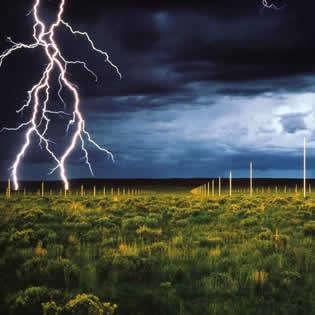
Painting, sculpture, hell even being in a regular rock band wasn’t enough for Walter De Maria. After moving to New York in 1960, hobnobbin’ and theorizin’ and fluxus-izin’ with crazyman composer La Monte Young, playing drums for a stint in The Velvet Underground, and establishing himself as one of the prominent sculptors in the emerging “minimalist” scene, De Maria looked for – and found – the ever-larger gesture. In search of an art that was more than just “art,” De Maria in 1968 filled the Galerie Heiner Friedrich in Munich with dirt, kicking off the whole earthworks movement. That same year, he recorded “Ocean Music,” which along with “Cricket Music” (from 1964) is available for the first time on Drums and Nature. “Ocean Music,” recorded with the help of rediscovered minimalist badass Tony Conrad, is a meditative piece beginning with – you guessed it – the sound of waves crashing along some shore somewhere. Some heavy solo tribal drumming eventually mixes in, then subsumes the ocean sound, and what we’ve got is something akin to New Age if New Age wasn’t fucking lame. That is, a perfect representation of the “natural,” but with an acknowledgement of the “human” (incidentally, La Monte Young also recorded a vocal piece with the ocean off Long Island as his backin’ band around the same time for Columbia, but it has yet to see the light of day). “Cricket Music” is less meditative, but no less amazing (and no less truth-in-advertising, title-wise). Listening to these compositionally simple, yet striking pieces, it’s too bad that De Maria hasn’t seemed to have done much since, musically. (Incidentally, if you ever get the chance, you should visit De Maria’s triptych of earthworks masterpieces: Lightning Field in New Mexico, the Earth Room in New York, and the Broken Kilometer, also in New York.)

Watersports are a Brooklyn-based duo who, on first take, don’t seem to have much in common with De Maria: what they do is on a much smaller scale. We live in a world overrun with the detritus of consumer culture, and Watersports recognize this through using petrochemically-produced consumer goods masquerading as “natural” devices. Yes, they make music with (among other more conventional instruments) those cheesy plastic waterfall meditation device thingies. In a sense, making music like this is a sort of ironic post-De Maria move (hence my connection): forget hauling your ass out to the ocean or a waterfall or a river or the woods on the chance you’ll hear some birds, bring (an artificial) nature to your cramped urban apartment! Anyway it’s a lot cheaper, and even cleaner, than filling it with three feet of topsoil. It may be that, in 2005, the closest we can get to nature is to just make our own hybridized, bastardized pockets of it. And while we’re doing that, why not make art from it?

Watersports take this sort of self-invented consumer-culture environmental art to new highs with their III CDR and their second self-titled cassette on their White Tapes label. And it doesn’t stop with the music: to listen to the damn cassette you gotta destroy a part of the red-stickered tape packaging. The CDR doesn’t require such confrontational tactics, but what you get is an extremely quiet, yet tactile (and hella short) meditative modern music, akin at its finest moments to a quieter, spiritually low-key but ultimately De Maria-esque “nature” jam. For those determined to spoil their progeny’s college fund-via-eBay (fuck the future, anyway), the music hidden inside the cassette might be worth disappointing a child. It would be hard to describe any of Watersports’ stuff as confrontational, seeing as their “aggressive New Age” m.o. would probably confuse the hell outta most ADHD-addled Lightning Bolt fans or somesuch, but the cassette is so quiet (even more so than III) that on the first track I had to check whether that was really the ice cream man outside the window or some bleed-through from Watersports’ Kingsland Avenue jamspace environs. A second piece ends the side with more identifiable drums and (perhaps) guitar, thumping a tribalistic jam reminiscent of Amon Duul being played by a housewife on a transistor radio as she daydreams idly while Montel’s on. When “getting back to nature” for most Americans means a fucking humpback whale tape in the car on the way to work, I can’t think of anything more perfect.

Buy Walter De Maria’s Drums and Nature and the Watersports cassette from our friends at Fusetron.

Silver Jews, Tanglewood Numbers (Drag City) CD

Thanks to Michaelangelo Matos, music editor over at the Seattle Weekly, who published this Silver Jews review in their CD review section this week:

In certain rock-crit circles it’s a foregone conclusion that authenticity as a lyrical quality in pop music is a bugbear at best and a futile pursuit worthy of ridicule at worst. That is, listeners are advised not to read into, much less trust, the machinations and maneuverings of musicians and their lyrics. So how does one respond to Tanglewood Numbers, knowing of Silver Jews frontman David Berman’s drug-abetted suicide attempt, as recently related in The Fader? Do Berman’s more-than-messy ordeals account for the darker mood of the album? Berman, also a published poet, has made — by his own account(ing), in a recent Pitchfork interview — a decent living writing the sort of cute faux-country aphorisms that wouldn’t sound too out of place in that old Phil Hartman Saturday Night Live sketch, where the late comic actor sang songs like “I Just Found a Fifty-Dollar Bill” and “I’m Drunk (Again).” However, in Tanglewood Numbers there’s an undeniable love-soaked yet bleak melancholia twisted in with the cleverness that, even without knowledge of Berman’s gossip-page backstory, rings as “true” as any set of pop lyrics can. Album opener “Punks in the Beerlight” sets the tone, with Berman for the first time sharing the microphone with his wife, Cassie, whose poised vocals offer a counterpoint to his growling drawl (to Berman’s credit, his singing is also more assured here). When they sing a cheesy line like “I love you to the max,” it’s easy to believe that they believe it.

A longer version, with a l’il bit more on the rest of the songs on the album, will appear here shortly.

Buy Tanglewood Numbers from our friends at Drag City.

Endless Boogie, 1 and 2 (Mound Duel) LPs

Today’s issue of the Baltimore City Paper contains my Endless Boogie review. Despite a few changes/editorial tinkerings (and the strange idea that it’s somehow available on CD), it’s not bad.

Good things come to those who wait. After eight years of existence, the fantastically and oh-so-descriptively named Endless Boogie has simultaneously released two albums every bit as jam-packed as its already legendary word-of-mouth live shows. No surprise there, since both were recorded live to two-track in the band’s practice space; the only thing really missing is the sweat and the beer.

The Boogie is a ferocious four-piece consisting of Double Leopards member Chris Grey on drums, former Naked Raygun Mark Ohe on bass, Swedish psyche-reissue dude Jesper Eklow on guitar, and most major record-dealer Paul Major on guitar and growling vocals. It’s easily the best heavy-minimalism rock band in New York, the most steadily consistent return on your buck, effortlessly blasting the socks off much younger rock pretenders roaming the city’s sanitized post-Giuliani streets.

The already-out-of-print 1 presents rifftastic messes every bit as melodically memorable as the best by Thin Lizzy, Foghat, or Coloured Balls (though usually at 10 times the length). 2, the readily available (for now) black-covered album, begins with the side-long, nearly instrumental jam “Stanton Karma” and enough guitar loudness (complete with audible radio bleed-through from the amplifiers) to make it as heavy as the Great Boston Molasses Tragedy of 1919. Since Baltimoreans aren’t “lucky” enough to reside in America’s capital of immense wealth and institutionalized poverty, Endless Boogie has recently visited Charm City, as well as other burgs up and down the Eastern seaboard. If you get the chance again, you need to check ’em out.

Jesper Eklow, post-review, adds the following nugget:

the radio you hear is just a radio (we always jam to the Mets game). the locked groove is gary cohen talking about pedro astacio getting out of ‘jam after jam after jam’…

SOME OLD SHIT

Gonna open up the files, here comes some (mostly) short reviews (most of which have been recently published in the new Bejeezus zine, mainly available in Louisville) that have been languishing in the archives. Enjoy.

Dungen, Ta Det Lungt (Subliminal Sounds) CD

Sweden’s been fertile ground for awesome psych reissues in the past coupla years. And wouldn’t you know it? They’ve got some good heavy slabs of new psych bands out now, too. Dungen‘s this band of Scandi whippersnappers who know how to bring the heavy jamz, with plenty of heaping helpings of melody. If anything, the sweetness might potentially put off some of the heavier psych heads out there. But fuck ’em, this album is great. “Panda” kicks off the show with a tune so catchy I’m tempted to learn some Swedish just so I can sing along. Dungen slows things down a bit by the fourth track, “Du hr for fin for mig” (yeah I have no idea what that means, either), which brings in some sappy strings and mellotron/synth soundz for maximum melodrama moments. Good times, and guaranteed to make the girls swoon.

Buy “Ta Det Lungt” from Subliminal Sounds.

Crain, Speed + 4 (Temporary Residence) CD

Whoa, this is a doozy. The debut album by Louisville’s super-heavy (and super-long-gone) Crain has just been reissued by Temporary Residence, and it’s about time. To say that this reissue was long overdue is an understatement. It’d be difficult for me to overstate the effect that Crain’s music had on my formative teenage years. It would also be impossible to recount the many times I saw them kick total ass live, though I do remember the Speed record release show quite clearly. That night I got my copy of the LP (limited glow-in-the-dark edition!) and, also, my mind blown by the sheer force that was Crain’s lineup at the time. Experience the glory for yourself, re-mastered to finesse.

Buy “Speed” from Temporary Residence.

The Weird Weeds, Hold Me (Edition Manifold) CD

To most people, weird as an adjective is a pejorative. Then again, most people are douchebags. C’mon, it’s not all that misanthropic to say that, oh, 80 percent of the earth’s population ain’t worth a damn. I’m sure most of the time you’ve felt that way too. Anyway, Austin, Texas’s Weird Weeds are weird in a non-pejorative way. That is, they are unique, not ooooh bad I don’t want to deal with this because I can’t/don’t/won’t understand it. Currently a three-piece (tho a four-piece on this CD), the Weird Weeds blend beautifully sung melodies with usually spare guitar lines and minimal drumming as accompaniment (though the first song “Paratrooper Seed” starts with what sounds like a nice synth part). Occasionally the players’ free-improv backgrounds come to the fore in the form of some radical-sounding guitar noodling and drum-thumpery (which adds a nicely-needed tension to the proceedings). All in all, this is emotional music, conveying a beautiful sense of desperation, without being emo blah bullshit.

Buy “Hold Me” from Edition Manifold.


Optimo, How to Kill the DJ Part Two (Kill the DJ/Tigersushi) 2CD

JG Wilkes and JD Twitch are the dj duo behind Optimo, the most popular dance club night in Glasgow, Scotland. How to Kill the DJ Part Two is their new mix compilation, and it melds dance floor classics with obscurities, and just plain weird stuff. Eclecticism is the name of the game here, and the listener ultimately is who “wins.” You’ve got your typical 00s party hits like Gang of Four‘s “Damaged Goods” (honestly, I get tired of hearing this one but these guys do mix it in inventively, so they get a pass), Arthur Russell‘s “Is It All Over My Face?” (under the Loose Joint moniker) and Carl Craig‘s “Demented Drums” but then there’s also tracks by the Sun City Girls, Langley Schools Music Project (covering “Good Vibrations” and signifying the change on the decks from Wilkes to Twitch), Suicide and Nurse With Wound to keep things interesting. The bonus disc compiles a good, non-mixed mix that listeners can play with. The now sound is the sound everything but the kitchen sink, people.

Keith Fullerton Whitman/Greg Davis, Yearlong (Carpark) CD

Keith Fullerton Whitman and Greg Davis toured together extensively in 2001 and 2002, and Yearlong is a fascinating document of their live electronic and electro-acoustic improvisations over that year. Though there’s very little music on Yearlong that could be described as “accessible,” there are some very pretty moments, along with some of the harsh sounds typical to a number of laptop improvising schtick. But don’t let the harsh sounds fool you: even at their most aggressive, there is a musicality to Whitman’s and Davis’s approaches, and Yearlong — while not for the average shmoe — definitely rewards patient listening.

Buy Yearlong from Carpark.

Excepter, Throne (Load, 068) CD; Excepter, Self Destruction (Fusetron, FUSE041) CD

With these two super-high-quality releases toward the latter half of the year, and another in the can, 2005 might be the year of Excepter. And what a year it’s been, so far: if you spent most of it drunk and/or high, or just questing after a transcendental state, you could do far worse by spinning these musically fantastic messes. Throne is the more stoned trip of the two, and flows with a lazy grandeur not often heard in today’s music “scene.” Sleepy electronics reminiscent of the RZA’s Ghost Dog score start out the disc on “Jrone (Three),” with a first few whisperings and moans which later grow into heavily echoed lamentations from recently-departed (from the band, I mean) member Caitlin Cook. Stoned soul steam engines take over, the vocals drop out, and soon Excepter spends the rest of Throne charting along some spooky shores in a haunted sailboat, which of course means that you really need to hear it. Self Destruction is in some ways the more straight-forward, yet hella dubbed-out, record out of the pair, though no less essential in its singularly bizarre messiness. Lanky soulja John Fell Ryan – the leader of the group – commences “Shoot Me First” with his deep-throated shamanistic vibes, going even deeper on vocal meditation/collaboration “I Don’t Get Wet in the Rain.” But there’s the dub/house mutated style present too: “Interplay: Lock Room” and “Interplay: Your House” recontextualize cheesy drum machine beats into higher states – though you probably won’t hear this shit at your local shitbag “dance music” nightclub anytime soon. Unlike Throne, Self Destruction is designed more with each track as a stand-alone, individual unit, and thusly gives ya more variety of the endless Excepter sounds to explore. Take the trips.

Buy Throne from Load Records.
Buy Self Destruction from Fusetron.

Roky Erickson, I Have Always Been Here Before: The Roky Erickson Anthology (Shout! Factory, D2K 32556) 2CD

From the opening yelp of “We Sell Soul,” his debut single as lead singer of the Spades (remember, p.c.-activist types: this was TEXAS in the mid-1960s), to the final cuts from his 1995 solo LP All That May Do My Rhyme, there is not an inessential cut on I Have Always Been Here Before, the finest retrospective of one of America’s most twisted musical treasures ever produced. I’m talking about Roky Erickson, people, and if you’re not familiar with or weren’t impressed by what you may have heard, take another listen. I’m not going to be so bold as to say that American psychedelic music wouldn’t exist without him (despite whatever Mayo Thompson might say, heh), but it shore would be a whole lot more boring planet without Roky’s music to see us through. Disc One begins with the aforementioned Spades a-side, then delves into the early essentials from Roky’s stint as leader of the legendary 13th Floor Elevators: “You’re Gonna Miss Me,” “Reverberation (Doubt),” and “Slip Inside This House” are the hallmarks, but there’s a few more classic (though less fetishized) Elevators tracks. Only complaint is or could be: where’s stuff from Bull of the Woods? The liner notes insinuate that it ain’t “full-tilt” enough, but I don’t think a track like “Dr. Doom” would be far out of place. Whatever. Anyway, stuff from post-incarceration Roky, mainly tracks with the Aliens, round out the disc, and that’s a great thing. Personally, though I love the Elevators, my absolute favorite Roky stuff is the late-70s-Stu-Cook-from-Creedence-produced Aliens stuff, and both discs have plenty of it. Basically, what Roky made with the Aliens remains some of the creepiest yet most strangely beautiful rock music I’ve ever heard, and I still get chills when I hear “I Think Up Demons” (presented here with its correct title), “Bloody Hammer,” and “If You Have Ghosts,” like I did the first time. This anthology could stop there and satisfy me, but it includes more, and fortunately that’s a good thing. The later tracks, in particular, are revealing, making me think that either Roky got an unfair shake from the music press when Openers and All That May Do My Rhyme came out, or maybe I just did listen right, or something. Either way, you gotta get this.

Buy I Have Always Been Here Before from Shout! Factory.