Tag Archives: Record Review

Walter De Maria, Drums and Nature (no label, no number) CD; Watersports, III (White Tapes, no number) CDR; Watersports, s/t (White tapes, no number) cass

(The following review appeared in issue #7 of Swingset Magazine)
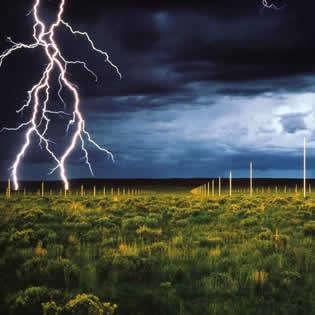
Painting, sculpture, hell even being in a regular rock band wasn’t enough for Walter De Maria. After moving to New York in 1960, hobnobbin’ and theorizin’ and fluxus-izin’ with crazyman composer La Monte Young, playing drums for a stint in The Velvet Underground, and establishing himself as one of the prominent sculptors in the emerging “minimalist” scene, De Maria looked for – and found – the ever-larger gesture. In search of an art that was more than just “art,” De Maria in 1968 filled the Galerie Heiner Friedrich in Munich with dirt, kicking off the whole earthworks movement. That same year, he recorded “Ocean Music,” which along with “Cricket Music” (from 1964) is available for the first time on Drums and Nature. “Ocean Music,” recorded with the help of rediscovered minimalist badass Tony Conrad, is a meditative piece beginning with – you guessed it – the sound of waves crashing along some shore somewhere. Some heavy solo tribal drumming eventually mixes in, then subsumes the ocean sound, and what we’ve got is something akin to New Age if New Age wasn’t fucking lame. That is, a perfect representation of the “natural,” but with an acknowledgement of the “human” (incidentally, La Monte Young also recorded a vocal piece with the ocean off Long Island as his backin’ band around the same time for Columbia, but it has yet to see the light of day). “Cricket Music” is less meditative, but no less amazing (and no less truth-in-advertising, title-wise). Listening to these compositionally simple, yet striking pieces, it’s too bad that De Maria hasn’t seemed to have done much since, musically. (Incidentally, if you ever get the chance, you should visit De Maria’s triptych of earthworks masterpieces: Lightning Field in New Mexico, the Earth Room in New York, and the Broken Kilometer, also in New York.)

Watersports are a Brooklyn-based duo who, on first take, don’t seem to have much in common with De Maria: what they do is on a much smaller scale. We live in a world overrun with the detritus of consumer culture, and Watersports recognize this through using petrochemically-produced consumer goods masquerading as “natural” devices. Yes, they make music with (among other more conventional instruments) those cheesy plastic waterfall meditation device thingies. In a sense, making music like this is a sort of ironic post-De Maria move (hence my connection): forget hauling your ass out to the ocean or a waterfall or a river or the woods on the chance you’ll hear some birds, bring (an artificial) nature to your cramped urban apartment! Anyway it’s a lot cheaper, and even cleaner, than filling it with three feet of topsoil. It may be that, in 2005, the closest we can get to nature is to just make our own hybridized, bastardized pockets of it. And while we’re doing that, why not make art from it?

Watersports take this sort of self-invented consumer-culture environmental art to new highs with their III CDR and their second self-titled cassette on their White Tapes label. And it doesn’t stop with the music: to listen to the damn cassette you gotta destroy a part of the red-stickered tape packaging. The CDR doesn’t require such confrontational tactics, but what you get is an extremely quiet, yet tactile (and hella short) meditative modern music, akin at its finest moments to a quieter, spiritually low-key but ultimately De Maria-esque “nature” jam. For those determined to spoil their progeny’s college fund-via-eBay (fuck the future, anyway), the music hidden inside the cassette might be worth disappointing a child. It would be hard to describe any of Watersports’ stuff as confrontational, seeing as their “aggressive New Age” m.o. would probably confuse the hell outta most ADHD-addled Lightning Bolt fans or somesuch, but the cassette is so quiet (even more so than III) that on the first track I had to check whether that was really the ice cream man outside the window or some bleed-through from Watersports’ Kingsland Avenue jamspace environs. A second piece ends the side with more identifiable drums and (perhaps) guitar, thumping a tribalistic jam reminiscent of Amon Duul being played by a housewife on a transistor radio as she daydreams idly while Montel’s on. When “getting back to nature” for most Americans means a fucking humpback whale tape in the car on the way to work, I can’t think of anything more perfect.

Buy Walter De Maria’s Drums and Nature and the Watersports cassette from our friends at Fusetron.

Silver Jews, Tanglewood Numbers (Drag City) CD

Thanks to Michaelangelo Matos, music editor over at the Seattle Weekly, who published this Silver Jews review in their CD review section this week:

In certain rock-crit circles it’s a foregone conclusion that authenticity as a lyrical quality in pop music is a bugbear at best and a futile pursuit worthy of ridicule at worst. That is, listeners are advised not to read into, much less trust, the machinations and maneuverings of musicians and their lyrics. So how does one respond to Tanglewood Numbers, knowing of Silver Jews frontman David Berman’s drug-abetted suicide attempt, as recently related in The Fader? Do Berman’s more-than-messy ordeals account for the darker mood of the album? Berman, also a published poet, has made — by his own account(ing), in a recent Pitchfork interview — a decent living writing the sort of cute faux-country aphorisms that wouldn’t sound too out of place in that old Phil Hartman Saturday Night Live sketch, where the late comic actor sang songs like “I Just Found a Fifty-Dollar Bill” and “I’m Drunk (Again).” However, in Tanglewood Numbers there’s an undeniable love-soaked yet bleak melancholia twisted in with the cleverness that, even without knowledge of Berman’s gossip-page backstory, rings as “true” as any set of pop lyrics can. Album opener “Punks in the Beerlight” sets the tone, with Berman for the first time sharing the microphone with his wife, Cassie, whose poised vocals offer a counterpoint to his growling drawl (to Berman’s credit, his singing is also more assured here). When they sing a cheesy line like “I love you to the max,” it’s easy to believe that they believe it.

A longer version, with a l’il bit more on the rest of the songs on the album, will appear here shortly.

Buy Tanglewood Numbers from our friends at Drag City.

Endless Boogie, 1 and 2 (Mound Duel) LPs

Today’s issue of the Baltimore City Paper contains my Endless Boogie review. Despite a few changes/editorial tinkerings (and the strange idea that it’s somehow available on CD), it’s not bad.

Good things come to those who wait. After eight years of existence, the fantastically and oh-so-descriptively named Endless Boogie has simultaneously released two albums every bit as jam-packed as its already legendary word-of-mouth live shows. No surprise there, since both were recorded live to two-track in the band’s practice space; the only thing really missing is the sweat and the beer.

The Boogie is a ferocious four-piece consisting of Double Leopards member Chris Grey on drums, former Naked Raygun Mark Ohe on bass, Swedish psyche-reissue dude Jesper Eklow on guitar, and most major record-dealer Paul Major on guitar and growling vocals. It’s easily the best heavy-minimalism rock band in New York, the most steadily consistent return on your buck, effortlessly blasting the socks off much younger rock pretenders roaming the city’s sanitized post-Giuliani streets.

The already-out-of-print 1 presents rifftastic messes every bit as melodically memorable as the best by Thin Lizzy, Foghat, or Coloured Balls (though usually at 10 times the length). 2, the readily available (for now) black-covered album, begins with the side-long, nearly instrumental jam “Stanton Karma” and enough guitar loudness (complete with audible radio bleed-through from the amplifiers) to make it as heavy as the Great Boston Molasses Tragedy of 1919. Since Baltimoreans aren’t “lucky” enough to reside in America’s capital of immense wealth and institutionalized poverty, Endless Boogie has recently visited Charm City, as well as other burgs up and down the Eastern seaboard. If you get the chance again, you need to check ’em out.

Jesper Eklow, post-review, adds the following nugget:

the radio you hear is just a radio (we always jam to the Mets game). the locked groove is gary cohen talking about pedro astacio getting out of ‘jam after jam after jam’…

Excepter, Throne (Load, 068) CD; Excepter, Self Destruction (Fusetron, FUSE041) CD

With these two super-high-quality releases toward the latter half of the year, and another in the can, 2005 might be the year of Excepter. And what a year it’s been, so far: if you spent most of it drunk and/or high, or just questing after a transcendental state, you could do far worse by spinning these musically fantastic messes. Throne is the more stoned trip of the two, and flows with a lazy grandeur not often heard in today’s music “scene.” Sleepy electronics reminiscent of the RZA’s Ghost Dog score start out the disc on “Jrone (Three),” with a first few whisperings and moans which later grow into heavily echoed lamentations from recently-departed (from the band, I mean) member Caitlin Cook. Stoned soul steam engines take over, the vocals drop out, and soon Excepter spends the rest of Throne charting along some spooky shores in a haunted sailboat, which of course means that you really need to hear it. Self Destruction is in some ways the more straight-forward, yet hella dubbed-out, record out of the pair, though no less essential in its singularly bizarre messiness. Lanky soulja John Fell Ryan – the leader of the group – commences “Shoot Me First” with his deep-throated shamanistic vibes, going even deeper on vocal meditation/collaboration “I Don’t Get Wet in the Rain.” But there’s the dub/house mutated style present too: “Interplay: Lock Room” and “Interplay: Your House” recontextualize cheesy drum machine beats into higher states – though you probably won’t hear this shit at your local shitbag “dance music” nightclub anytime soon. Unlike Throne, Self Destruction is designed more with each track as a stand-alone, individual unit, and thusly gives ya more variety of the endless Excepter sounds to explore. Take the trips.

Buy Throne from Load Records.
Buy Self Destruction from Fusetron.

Roky Erickson, I Have Always Been Here Before: The Roky Erickson Anthology (Shout! Factory, D2K 32556) 2CD

From the opening yelp of “We Sell Soul,” his debut single as lead singer of the Spades (remember, p.c.-activist types: this was TEXAS in the mid-1960s), to the final cuts from his 1995 solo LP All That May Do My Rhyme, there is not an inessential cut on I Have Always Been Here Before, the finest retrospective of one of America’s most twisted musical treasures ever produced. I’m talking about Roky Erickson, people, and if you’re not familiar with or weren’t impressed by what you may have heard, take another listen. I’m not going to be so bold as to say that American psychedelic music wouldn’t exist without him (despite whatever Mayo Thompson might say, heh), but it shore would be a whole lot more boring planet without Roky’s music to see us through. Disc One begins with the aforementioned Spades a-side, then delves into the early essentials from Roky’s stint as leader of the legendary 13th Floor Elevators: “You’re Gonna Miss Me,” “Reverberation (Doubt),” and “Slip Inside This House” are the hallmarks, but there’s a few more classic (though less fetishized) Elevators tracks. Only complaint is or could be: where’s stuff from Bull of the Woods? The liner notes insinuate that it ain’t “full-tilt” enough, but I don’t think a track like “Dr. Doom” would be far out of place. Whatever. Anyway, stuff from post-incarceration Roky, mainly tracks with the Aliens, round out the disc, and that’s a great thing. Personally, though I love the Elevators, my absolute favorite Roky stuff is the late-70s-Stu-Cook-from-Creedence-produced Aliens stuff, and both discs have plenty of it. Basically, what Roky made with the Aliens remains some of the creepiest yet most strangely beautiful rock music I’ve ever heard, and I still get chills when I hear “I Think Up Demons” (presented here with its correct title), “Bloody Hammer,” and “If You Have Ghosts,” like I did the first time. This anthology could stop there and satisfy me, but it includes more, and fortunately that’s a good thing. The later tracks, in particular, are revealing, making me think that either Roky got an unfair shake from the music press when Openers and All That May Do My Rhyme came out, or maybe I just did listen right, or something. Either way, you gotta get this.

Buy I Have Always Been Here Before from Shout! Factory.

The Vocokesh, Through the Smoke (Strange Attractors Audio House, SAAH034) CD

Everybody knows that old adage about not judging a book by its cover. Well it’s nonsense. You can judge a book, a record, a dude, even a cover by its cover. It’s easy to do. Hell, most records have terrible covers, and well, most records are terrible. However, if you took a gander at the Vocokesh’s Through the Smoke with its goofy-ass “retro-lounge” cover (nicked from some probably-bad 1959 Warner Bros. release) and thought “gee this must suck, lookit those douchebags,” you’d be 100-percent wrong, my friend. Then again, if you had to go by its cover because you didn’t have any clue who the Vocokesh are, you’d be the bigger douchebag anyway. The Vocokesh are and remain one of Milwaukee, Wisconsin’s finest musical exports (and hey the Oil Tasters, Couch Flambeau and the Frogs were from there – to name just a few great bands from Laverne and Shirley’s hometown). So if ya don’t know, the Vocokesh is made up of longtime scene stalwarts John Helwig and Richard Franecki (whom you may know from f/i) with various pals helping out here and there. If ya don’t know their previous stuff on Drag City and Strange Attractors (among other places), well what you should expect is some heavy instrumental vibing akin to but different from, say, Pink Floyd, Tangerine Dream, Ash Ra Tempel, Popul Vuh, other big fucking names. Is it silly for me to put them alongside such obvious greats? Hell no. This is some great, ominous, filthy stuff. And unlike most of the European psych stuff I just cited, the Vocokesh also rock pretty fucking hard while evoking transcendental moon mountain mists and other nonsense. For as far-out as these guys go (and that’s pretty far, you’ll need more than a canoe my friend), Through the Smoke is still pretty heavily grounded.

Buy Through the Smoke direct from Strange Attractors Audio House.

In other, completely unrelated news, it appears all friends and family living on the Gulf Coast are safe, though most everyone’s houses were destroyed. At least they’re alive, which is what matters most. From just a music fan-standpoint (ugh), given its history, the devastation that New Orleans is struggling to endure is pretty fucking depressing. But obviously more importantly, my condolences go to the living and the dead victims of Katrina and its aftermath. If you can, please donate to the American Red Cross. Thanks.

Thuja, Pine Cone Temples (Strange Attractors Audio House, SAAH3223) 2CD

The squeaks and plinkity-plonks of post-Bailey not-really-jazz improvisation have seemingly been replaced in the international noise “underground” by a new lexicon of metallic scrapes, low rumbles resembling steady bong hits, and various other underwater soundz. I’m not one for codifying movements – and “noise” or “new beard america” or whatever cockamamie catchphrase The Wire comes up with next week sure are silly vis-à-vis ALL MUSIC IS NOISE, duh (don’t get me wrong though ‘cuz I like The Wire alright) – but there’s a lot more emphasis on DENSITY and VOLUME as parameters in “deep listening” these days, and I ain’t talking about Pauline Oliveros’s moustache (and don’t get me wrong ‘cuz both Pauline and her moustache totally kick ass!). Thuja was, perhaps, ahead of the curve, as I sure wasn’t paying attention. Pine Cone Temples consists of recordings made by the quartet of Loren Chasse, Glenn Donaldson, Rob Reger and Steven R. Smith between 1999 and 2004, and I can’t help but think that most of the stuff is pretty forward-thinking, anticipating today’s crop of I-got-some-pedals drone goons. But it ain’t just a couple of notes spread over a couple hours (again, don’t get me wrong ‘cuz Conrad, Palestine and a few others show how two notes can destroy worlds). But there’s a lot of variety here: organ vamps interrupted by chainsaw-attacked guitar, delicate sustained piano figures reinforced with amplifier static and no-so-random random percussive accidents, and even more stuff – all of it very pretty – than I have the time or space or attention span to go into. Beats hearing some twenty-something chump noodle on an expensive guitar because he – always he – read Thurston namedrop Derek Bailey in an interview (don’t get me wrong, I like Thurston) (and I’m talking about myself there, always).

Buy Pine Cone Temples from Forced Exposure

Andrew Paine and Richard Youngs, Mauve Dawn (Fusetron, FUSE037) LP

For nearly twenty years, Richard Youngs has confounded collectors of obscure musics with his incredibly singular vision – so singular that it’s difficult for even a seasoned fan to describe – yet all the while sounding completely different with every release. From the early solo classic Advent and the duo masterpiece Lake (with Simon Wickham-Smith) to his more recent, more “accessible” guitar-and-voice work on Sapphie, Youngs has continued to astound listeners with what he’s capable of: beauty, terror, whimsy; sometimes all on the same album. Mauve Dawn, his new duo with Andrew Paine on Chris Freeman’s excellent Fusetron label, is no different. Starting with a heavy drone reminiscent of Ligeti’s pieces on the 2001: A Space Odyssey soundtrack, the title track “Mauve Dawn” announces itself as a primordial blast, an ur-music suitable for either the beginning or the end of the world. Amazingly enough, Paine and Youngs achieve this fantastic heavyosity not with primitive instrumentation, but with electronics, perhaps even, dare I say it, digital signal processing. As the record unfolds into the subsequent songs, the electronics make room for other instruments: bells, voice (clipped phrases here and there), and indecipherable noises. By the second side, the drones have given way to more open spaces, and as a result this side is perhaps the more “modern” of the two. Indeed, some aspects of the second side touch on more resolutely timely laptop-isms, while eschewing the glaringly obvious “hey-lookit-me-I’m-makin’-music-on-a-computer” moves ground into cliché by 10,000 bald geeks-in-tiny-glasses over the past decade or so. This music exists not to demonstrate somebody’s disposable-income purchasing power or even worse some company’s lame software, but because it has to. Knowing Youngs’ and his various collaborators’ music over the years, at this point, I expect nothing less.

Keith Fullerton Whitman, Multiples (Kranky) CD

Keith Fullerton Whitman aka Hrvatski is mostly known for his older drill n’ bass originals and remixes of fellow travelers such as Matmos, Cex and Kid606. His first solo album under his actual given name, Playthroughs, was more in an experimental-drone mode, and though I like a lotta stuff like that, for some reason it bored me. HOWEVER, Multiples is quite the burner. The premise behind this one is that Mr. Whitman limited himself to building the pieces on the album from toying with vintage synthesizers he had access to during a stint lecturing at Harvard, and while that probably reads as eye-glazing-over, not to mention ear-bores-galore, the end result is anything but. Multiples is, I’m happy to say, a thoroughly engaging and engrossing electronic album, every bit as accessible and intriguing as your standard rock band bullshit, yet made with entirely different components (and no vocals neither). Though the song titles only detail what instruments were used, they have clear schematic and thematic sounds, almost mini-dramas for the ear. Good stuff.

Crime, San Francisco’s Still Doomed (Swami) CD

OH HOLY FUCK THIS IS AWESOME. Basically, Crime was “San Francisco’s First and Only Rock and Roll Band.” Now, sure, that’s a bit of hyperbole, and even I like Quicksilver, the Jefferson Airplane, the Grateful Dead, the Avengers, etc. so it ain’t even accurate. But Crime were the true real deal, one of the first punk bands to release singles in America outside of New York, and of a much higher quality than what would pass for “punk” in the UK. Most of their recordings have been sadly only available as bootlegs, and even the most discerning music fans probably only know Sonic Youth’s cover of “Hot Wire My Heart.” So now here’s your chance to get hip.